• Skip to primary navigation
  • Skip to main content

Complete Guide

Wiki for Dummies

  • Home
  • About Us

admin

Niti Aayog

January 22, 2023 by admin Leave a Comment

Niti Aayog or National Institution for Transforming India is the Government of India’s policy think tank established in 2015 to replace the Planning Commission. Since its inception, there are both ups and downs in its performance. 

Positive: 

  1. Strengthened the spirit of ‘Cooperative Federalism’ by recognizing ‘strong states make a strong nation’ i.e. team India approach  
  2. Inculcating a ‘bottom-up’ approach for the development process. 
  3. Having specialists and generalists on board creates synergy.   
  4. Various subgroups, task forces, expert panels and high-powered committees have been set and they have done a commendable job
    1. Bibek Debroy – revamping railways 
    2. three C.M subgroups – CSS, SBA, Skill India  
    3. Tarun Khanna of Harvard – Atal Innovation Mission and Self-Employment and Talent Utilization 

Aayog is awarded a five-star rating by the Bureau of Energy Efficiency (BEE) for pioneering the changes in Government Buildings. 

Lagging areas: 

  1. The Aayog lack functional autonomy and constitutional backing. 
  2. Many states are still not attending Aayog’s meeting showing a lack of outreach by NITI 
  3. There is a lack of competent officers and staff members leaving many posts vacant. Apart from that most officers consider NITI Aayog a punishment posting. 
  4. No clear distinction between the roles of the NDC, Governing Council and Inter-State Council – which may lead to policy overlap. 

On a whole, the institute is at best a work in progress. The status and mandate of the institution are clear i.e think tank. It should have no difficulty in playing a more meaningful role in shaping the country’s future.  

Reasons for creation

  • Changed Context
    • Greater people’s expectation which requires improvement in governance, and dynamic policy shifts that can seed and nurture large-scale change
  • States have matured
    • Diversity has enriched the Indian experience. Pluralism has reshaped federal consensus
    • States don’t want to be a mere appendix to the centre. They want a decisive say in determining the architecture of economic growth and development.
  • There can’t be a one size fits all approach. Which undermines harmony and creates needless tensions.
  • It is reasonable to centralize power where central control and uniformity are not clearly essential or it is impracticable – B.R.Ambedkar
  • Technology has increased access to & sharing of info
  • Centralised planning has a diminished role to play. since there are market forces and global shifts.

Forces transforming India

  • The services sector and Industry are operations on a global scale.
  • Government is more of an enabler rather than a provider of 1st and last resort.
  • The role of the government as a player in the industrial and service sector be reduced. Instead, the Government should focus on enabling legislation, Policy Formulation and regulation.
  • Agriculture – Improved due to technology and farmer’s efforts
    • Therefore need to move from pure food security to a mix of agricultural production which will increase the return to farmers
  • Today we reside in a global village connected by modern transport, communication, media and networked international markets and institutions. As India contributes to global happenings, it is also influenced by it. Global economics and geopolitics are getting increasingly integrated. India needs to be an active player in the debates and deliberation on the global commons esp in unchartered areas. (Human Rights, Education and Environment…etc)
  • India’s middle class is unique w.r.t size, and purchasing power and it is increasing with the entry of the neo-middle class which is an important driver of growth and has enormous potential because of high education levels, mobility, and willingness to push for change in the country. Therefore this economically vibrant group needs to remain engaged and it’s potential fully realised.
  • India’s pool of entrepreneurial, scientific and intellectual human capital is a source of strength waiting to be unleashed. Social capital needs to be leveraged through appropriate policy initiatives.
  • NRI: Spread across more than two hundred countries. Contributes to significant, geo-economic and geopolitical strength. Future national policies must incorporate this strength to broaden their participation in new India beyond their financial support. Technology and management expertise should be tapped.
  • Urbanisation is an irreversible trend. Therefore make it an integral part of development. Use it as an opportunity to use modern technology to create a wholesome and secure habitat and reap economic benefits
  • Transparency – an important element of good governance. In the digital age, modern communication like social media is a powerful instrument to share and explain the thoughts and actions of the government. This trend will only increase with time. Government and governance will have to be conducted in total transparency by using technology to reduce opaqueness and thereby reduce the potential for misadventures. Technology and informational access have increased unity and diversity helping to integrate the different capabilities of regions, states and ecosystems towards an interlinked national economy.
  • Our development model has to become more consensual and cooperative it must embrace the specific demands of states, regions and localities. Create a shared vision of national development based on human dignity, national self-respect and inclusive and sustainable development.

Challenges before the nation

  • Need to fruitfully leverage India’s demographic dividend through education, skill development, employment, productive opportunities to work in the frontiers of science and technology, knowledge economy.
  • Poverty elimination – Antyodaya – Upliftment of downtrodden. Create an environment and support system that encourages women to play their rightful role in nation-building. Address gender inequalities, create equality of opportunity, and inclusiveness, and give weaker segments like SC and ST’s the ability to influence the choices made in settling the national agenda.
  • Fully integrate villages institutionally into the development process, so that we can draw on their vitality and energy.
  • India has 50 million small businesses which is a major source of employment creation. Need to provide support to this sector w.r.t skill, knowledge upgrades, access to finance and relevant technology.
  • Disaster Management – Responsive development implies environmentally sound development. India is one of the megadiverse countries. Our Environmental and ecological assets are eternal. It must be preserved and safeguarded. Our legacy to future generations must be sustainable progress. Each element to future generations must be sustainable progress. Each element of our environment and resources namely water, land and forest. (Jal, Jameen and Jungle). Our developmental agenda should not compromise the quality of life of the present and future generations.
  • States – The role of government in achieving national objectives may change with time but it will always remain significant. The government will continue to set policies that anticipate and reflect countries’ requirements and execute them in a just manner for the benefit of citizens. The continuing integration with the world politically and economically has to be incorporated into policy formulation and government functioning.
  • Effective governance in India will rest on the following pillars
    • Pro-people Agenda : That fulfills aspirations of society and individual
    • Pro-active : Anticipate and respond to needs
    • Participation : Empower women in all aspects
    • Inclusion of all groups especially weaker sections
    • Equality of opportunity for our country’s youth
    • Transparency through the use of technology to make the government visible and responsible
  • Governance across public and private domains is the concern of society as a whole. Everyone has a stake in ensuring good governance, and effective delivery of services. With public services often being delivered by private entities. There is greater scope for participation in the citizenry.
  • Institutional framework of government has matured and developed over the years. Specific to the planning process, there is an need to separate the distinct process of governance from the strategy of governance.

Therefore in view of these challenges there is a need for an institution to serve as a think tank – a directional and policy dynamo. These institutions has to provide relevant strategic and technical advice across policy spectrum. It should include matters of national and international importance on the economic front. It should disseminate best practices from within and outside the country. It should respond to a changing and more integrated world. It will replace centre to state one way flow of policy with genuine and continuing partnership with states. It must have a necessary resources knowledge skills and ability to act with speed. It will provide strategic policy vision for the government. Deal with contingent issues. It must remember no single model can be transplanted form outside to India. We need to find own strategy for growth. Bharatiya approach to development.

Objective of Niti Aayog

  • Evolve shared vision of national development with active involvement of states especially in priority sectors.
  • Foster Cooperative federalism through structured support recognizing strong states make a strong nation.
  • Develop mechanism to formulate credible plans at village level and aggregate these progressively at higher levels of government
  • Ensure that national security interests are incorporated in economic strategy and policy
  • Pay special attention to societal sections that may be at risk of not benefiting adequately form economic progress.
  • Design strategic long term policy and programme frameworks and monitor their progress efficacy. Lessons learnt through monitoring and feedback will be used for innovative improvements and mid-course corrections.
  • Provide advice and encourage partnership between key stakeholders and national and international think tanks
  • Create a knowledge innovation – entrepreneur support system through a collaborative community of national and international experts.
  • Offer a platform for the resolution of inter-sect-oral and inter-departmental issues in order to accelerate the implementation of development.
  • Maintain state-of-the-art resources centre and be a repository of research on good governance, and best practices and disseminate it to stakeholders.
  • Actively monitor and evaluate Policy implementation
  • Identify resources to strengthen the success and scope of delivery.
  • Technology up-gradation for Policy implementation.
Filed Under: Uncategorized

Central Secretariat

January 22, 2023 by admin Leave a Comment

The central secretariat is the admin complex and nodal agency of PF comprising all ministries/departments. Works on the basis of tenure and split system. Politically it is headed by the respective minister and administratively by a secretary.

Split System

Segregation of Policy formulation or PF and Policy implementation or PI between HQ and field agencies. It is believed that PF should be separated from PI since it requires a different mindset. 2nd ARC administrative reforms commission PF requires a broader perspective conceptual understanding and domain expertise, while PI requires in-depth knowledge and managerial skills.

Advantages

  • HQ can take a holistic objective perspective and make a dispassionate assessment.
  • Policy uniformity and consistency
  • Consider intersectoral implications
  • Consult the concerned department – Finance and Law
  • If the field agencies are made solely responsible for PF, it may lead to ad hocism. Create confusion when the field officer is transferred, changed or moved on
  • The policy will become a weathercock while HQ can bring in greater performance

But the split system should not be looked at in an isolated manner, need to bring field perspective to HQ concerned, and give flexibility and operational autonomy to field agencies to adapt to local conditions also HQ is not expected to interfere in day-to-day operations i.e it should not do micromanagement. Along with the split system, the tenure system becomes necessary.

Tenure System

Mobility of officials between field and HQ i.e between state and centre i.e AIS after serving in the field and in state secretariat comes to the central secretariat and then either goes back to states or continues to rise up in the central secretariat. For the past few years, IAS probationers will get attached to different central ministries and departments in their initial training period so as to gain perspective and insights on policy formulation at the beginning stage itself.

Advantages

  • Helps both centre and state talent sharing
  • Promotes cooperative and collaborative federalism
  • Generates a national outlook among public functionaries – transcends parochial boundary and contributes to national integration
  • When posted to HQ, they gain knowledge of policy formulation which helps them when they go back to the state and assume greater responsibilities
  • It brings field perspective ground realities to HQ which tends to suffer from a lack of time and place knowledge leading to armchair policy formation (making policies at HQ without understanding local needs and variations – one size fits all approach)
  • HQ postings increase civil services morale since they carry greater perks, privileges and proximity to the political executive.

Disadvantages

  • This may result in an office-dominated admin instead of an officer influencing office procedure, the converse happens procedure becomes sacrosanct and he becomes a procedure worshiper.
  • Does not ensure specialisation.
  • Some officials may be interested in their field stay while others may want to migrate to the centre. The tenure system does not operate strictly on a rotation basis.
  • States also complain about the name of the tenure system, the centre takes away the competent and leaves the residue behind.
  • Many officials become birds of passage with divided loyalties between the centre and state or no loyalties.

Structure of central secretariat

The secretariat at fort Williams, Calcutta was designed to function during the company and crown’s period for furnishing information for PF and PI and carrying out orders. Corn Wallis, Wellesley, and Curzon contributed to organising the secretariat on more scientific lines. Today secretariat is an admin complex. The nodal agency of PF comprising of all ministries and departments. Politically it is headed by the respective minister and administratively by a secretary.

Functions

  • Staff role – A3
  • Secretariat support for the political executive
  • Make, modify or evaluate policies
  • Draft rules, regulations, amendments, bills …etc
  • Undertake sectoral planning, POSDCoRB, HRM
  • Securing admin, and financial approvals from competent authorities
  • Monitor PI by field agencies
  • Do PE – policy evaluation based on feedback
  • Initiate measures to develop greater competence in HQ and field
  • Deliberate and undertake scrutiny in consultation with other ministries and department
  • Assist minister in charge in discharging his duties w.r.t parliamentary responsibilities – Q & A reply statements, assurances, resolutions, motions…etc
  • It is a think tank, organisational memory, MIS, and keeps all the surveys, reports, committee findings, investigations….etc

Strengths

  • Time-tested systems evolved from company rule to crown rule to the present day.
  • The rule-based procedure is driven
  • Ensures stability during normal times and crises – smooth transfer of power from one elected government to another
  • Committed to political neutrality prevented the politicization of government services and policies
  • Wherever essential structural innovations like autonomous bodies like empowered commissions have come up
  • The link between PF and PI through the tenure system

Weakness

  • Structural, Operational, Personnel
  • Structural
    • oversized, bloated bureaucracy, top-heavy
    • Undue emphasis on routine function leads to national priorities not getting the due attention
    • Functions which are best carried out by other agencies or can easily be outsourced or continued to be retained by the centre
    • Fragmentation of function – general trend is to divide and subdivide – Less E3, the law of diminishing marginal utility
    • The proliferation of ministries and departments with weak integration and coordination ( no convergence, duplication, or silos)
    • Extended hierarchy with too many levels causing delays and diffused accountability. Everyone’s responsibility is no one’s responsibility
  • Operational
    • Many levels don’t contribute to decision-making or add value – ideally as per the manual of office procedure files are to be declared in 3 levels only (originate, initiate and decide).
    • However, the tendency is to involve everyone – No management by exception – Risk avoidance.
    • Weberian dysfunctions, goal displacement, self-aggrandisement, trained incapacity, status quo, elitist, emphasis is on consultation
    • Movement of files becomes a substitute for decision making leading to delays inefficiencies, and red-tapism(avoidable delay) except for some committees and boards, there is a lack of a culture of delegation and no principle of subsidiary. (if you can delegate you should delegate)

Management observation w.r.t bureaucracy working

  • Work expands to the max time available
  • Officials multiply sub-ordinates and not rivals
  • Eventually, everyone rises to his maximum level of incompetence
  • Officials create work for each other
  • Trivial issues get sorted out – vital issues remain
  • Pareto principle – 20/80 – 80% of work done by 20% of people

Personnel Weakness

  • Carrier stagnation at lower levels
  • No effective performance appraisal system
  • Lack of leadership morale, motivation, capacity building

Solutions by ARC

  • The centre should exclusively focus on defence, IR, Justice, ROL, and Human development through access to good quality education and health
  • Infrastructure
  • Sustainable natural resource management
  • Social security
  • Social Justice
  • Macro-Economic Management
  • Only National economic planning w.r.t other sectors centre should adopt the principle of subsidiarity

Advantages of subsidiarity – also advantage of decentralisation, LSG, PRI

  • Increase E3
  • SMART
  • Management by exception
  • Stakeholders mentality
  • A better understanding of local issues – no remote sensing
  • Local finality – local problems get solved at local levels
  • Citizen-centric admin – Focus shifts from process to performance. Not only do things right but also do the right things.

Other Reforms

  • Downsize / right size
  • Redeploy, and retrain surplus staff after manpower planning
  • Generalise the specialist and specialise the generalist
  • Outsource non-core activities
  • Use ICT – Info, Communication, tech – E-Governance and M-Governance
  • Delegate, decentralise and give autonomy
  • Expose personnel best management practices
  • Single window clearance
  • RTI and RTS

Chief Secretary – Crisis Management

  • Coordination, monitoring, heads crisis management group at the state level.
  • In case of man-made crises – L&O, riots, LMN – deal with them fundamentally and not just symptomatically.
  • Address the root cause through development, and good governance and bring them into mainstream
  • Looks at inter-state disputes and conflicts – can take a long-term and more objective view – make use of their position and being a part of AIS use tact diplomacy in resolving outstanding issues.

Filed Under: Uncategorized

PMO – Prime Minister’s Office of India

January 22, 2023 by admin Leave a Comment

Single wheel does not move

– Kautilya

PMO – Prime Minister’s office was called PMS or Prime Minister’s Secretariat until an emergency. Line agencies need A3 – Aid, Advice, and Assistance of staff agencies to perform in E3 – Efficient, Economic and Effective manner. The need is imperative at the apex level of admin, In a parliamentary democracy where the PM has multiple roles and responsibilities, it is inevitable for the PM to have dedicated staff support. Therefore the need for PMS / PMO.

Roles of PMO

  • Secretarial assistance to PM
  • Headed by Principal Secretary to PM who is also the principal advisor to the PM
  • Staff Role A3 – today there are specific domain advisors like NSA, CEA, and Scientific advisor to the PM. But still, it is Principle Secretary to PM who is the principal advisor
  • Prepares PM w.r.t Parliamentary responsibilities like departments retained by PM – personnel, space and atomic energy …etc
  • PMO is a residual legatee – A function which is specifically not assigned to any other agency operated out of PMO
  • The PM relief fund is operated out of PMO
  • Image Management – media and other management
  • DMU – Delivery monitoring unit for monitoring flagship programmes. Now PRAGATI – Proactive governance and timely implementation. It is a multipurpose and multimodel platform for addressing the common man’s grievances and simultaneously monitoring and reviewing essential programmes and projects of GOI as well as projects flagged by states. It bundles the latest technologies – digital data management video conferencing and geo-spacial technology. It combines cooperative federalism since it brings the secretary of GOI and the chief secretary of state in one stage with the latest info and visuals of the ground-level situation.

Relationship between PMO and Cabinet Secretariat

  • 1950’s
    • Nascent existence of PMO. No conflict between PMO and Cab.Sec
  • 1960’s
    • Top-ranking Bureaucrats enter PMO for 1st time but Cab. Sec maintained its pre-eminence.
  • Late 1960’s and early 1970’s
    • Increase in concentration of powers in PM. Presidentialisation of PM. COM reduced to endorsing body. Therefore PMO emerged as the most trusted agency closer to PM than any other agency. Became the sounding board, eyes and ears. Alter ego of PM.
    • Principle communicator between PM and other agencies. Former bureaucrats recalled in their autobiography that PMO teams accompanied PM on foreign tours even when the foreign minister was not present. A strong PMO supplemented the presidential style of PM’s work and became like a de facto cabinet.
  • Emergency Period
    • PMO was the principal think tank, supposed to have controlled RAW and IB during this period. Major foreign policy and economic thinking came from PMO. PM was perceived to be involved in power brokering. Played a key role in the excesses committed during an internal emergency.
  • Post Emergency Period
    • Nomenclature changed from PMS to PMO to reduce the institutional importance by verbally downgrading it from secretariate to office. But this was only a cosmetic and symbolic change and ultimately PMO is as powerful as PM, wants it to be or makes it to be.
  • The mid to late ’80s
    • Increased size of PMO, separate Minister of State for PMO. Conceived and operated many mission-mode projects like telecom, science, tech…etc. Lateral entry of experts from other sectors to PMO (non-bureaucrats and domain experts like Nandan Nilekani)
  • Late 90’s to early 2000
    • Principal Secretary to PM emerged as the chief channel of communication between the PM and other institutions
  • Rainbow coalition
    • Of 24 parties increased dependency on PMO for coordination-related issues. Principal Secretary to PM entrusted with multiple responsibilities – functioned as NSA – played a crucial role in negotiating during the IC-814 hijack case.
    • The chief secretary was overshadowed by PMO even cabinet ministers met the PM through the Principal secretary. He is seen as a super advisor assisted by a group of officials seen more as a powerful line agent than a staff agent.
  • Current Phase
    • Regulations amended to let PMs choose as Principal Secretary
    • PMO is playing a more hands-on role with mission mode deadlines.
    • In sync with PM’s leadership style. A sense of urgency, close monitoring, real-time tracking, and conflict resolution.
  • Conflict resolution and convergence
    • Cabinet Secretariat in this phase is more of a coordinating body and has shown remarkable restraint and maturity and it is refused to be drawn into power politics over the years. Being the oldest of secretariate has sometimes been overshadowed by PMO. The youngest of the secretariate due to its proximity with PM.
    • It is a functional imperative that the PM is given dedicated and adequate staff support given his multiple responsibilities. At the same time, any secretariate requires competent and experienced diplomatic and tactful administrators. At the post of cabinet secretariat, the leadership quality of the civil servant is tested to its maximum. On the other hand post of Principal secretariat to the Prime Minister is uniquely endowed having tempting access to power, because it is closest to the PM.

Ultimately it is up to the incumbent holding the post and on the PM to keep PMO within limits. It is a staff agent and should not become a crutch. PMO is inevitable staff agent and undesirable line agent. Both chief secretary and PMO need to evolve a healthy functional relationship to exercise the responsibilities in E3 manner.

Filed Under: Uncategorized

6 Advanced Tips for Optimizing Your WordPress Site for Speed

January 17, 2023 by admin Leave a Comment

WordPress is one of the most popular content management systems (CMS) on the market, powering over 40% of all websites on the internet. However, as your website grows and attracts more traffic, it can start to slow down. This not only affects the user experience, but it can also negatively impact your search engine rankings.

In this article, we’ll go beyond the basic tips for improving your WordPress site’s speed and share some advanced techniques to help you take your optimization to the next level.

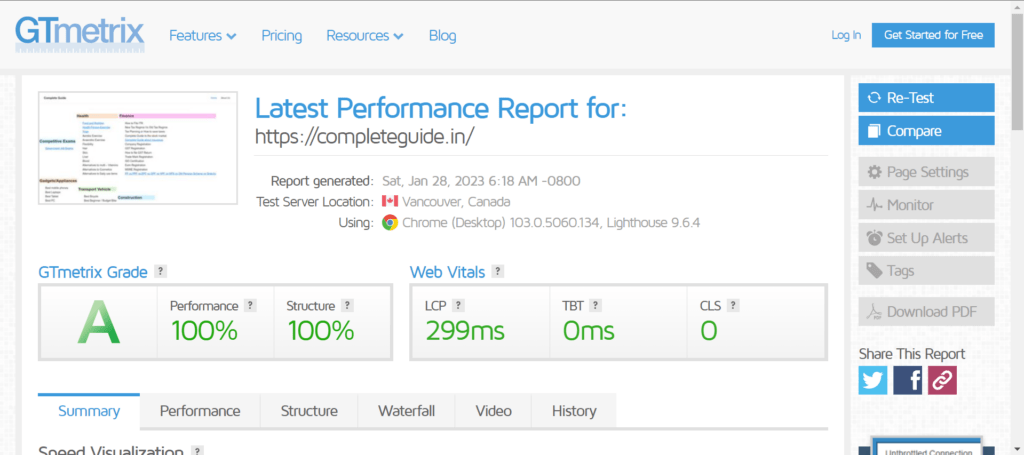
Before I begin I will show you the proof of the performance of my website in GTmetrix.

Screenshot 20230128 075125
How to score a perfect 100% in GTmetrics

I achieved this performance by just blindly following this Udemy course of Mr Andrew Eaton. The course is dirt cheap as well as the instructor is better than the best when it comes to supporting, he answers all your queries within a few minutes as well as he goes beyond what he promises as a part of his course. The amount of expertise that he shares through his course is the knowledge and experience that he gathered over several decades and can’t be gathered from any degree from any college. So, consider yourself lucky if you happened to take his course.

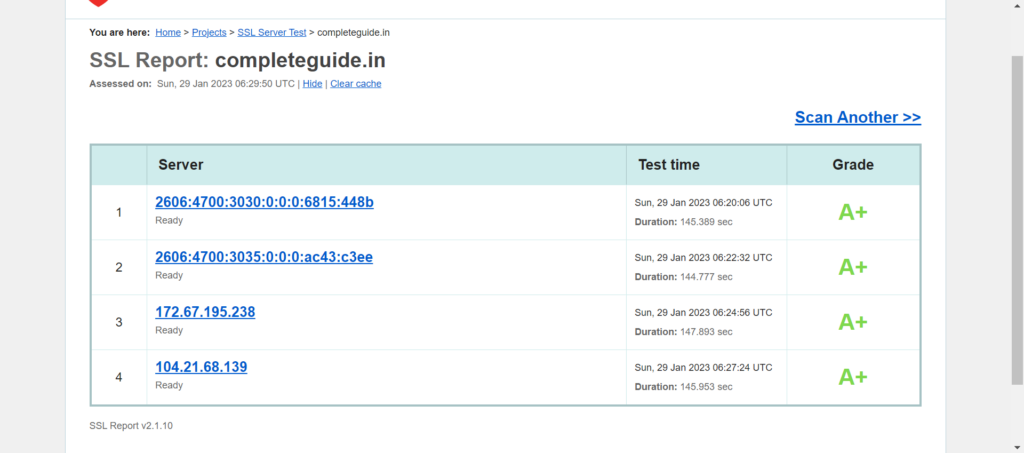
Not only I achieved the perfect 100% but also I achieved a perfect A+ grade from ssllabs.com.

Screenshot 20230129 120406
How to get a perfect A+ score in ssllabs.com

1. Move to a high-performance hosting provider

A high-performance hosting provider is a company that offers a range of hosting services, including web hosting, virtual private servers, and dedicated servers, with a focus on providing high levels of performance and reliability. These providers typically use high-end hardware and technologies to ensure that websites and applications hosted on their servers are able to handle large amounts of traffic and perform well under heavy loads. Some examples of high-performance hosting providers include Amazon Web Services, Google Cloud Platform, DigitalOcean, Vultr…etc.

Vultr provides the most value for money as well as the cheapest high-performance hosting among several hosting providers. They also provide a $100 signup credit when you signup to test their servers.

2. Use a Content Delivery Network (CDN)

A content delivery network (CDN) is a network of servers that are distributed around the globe. When a user requests your website, the CDN will serve the content from the server that is closest to their location. This can significantly reduce the load time for your website, especially for users who are far away from your server’s physical location.

Several popular CDN providers include Cloudflare, Akamai, and Amazon CloudFront. Most of these providers offer a free plan, so you can test out the service before committing to a paid plan. I used a free tier from Cloudflare to achieve the coveted perfect score of 100/100. The results can vary depending on the amount of static and dynamic content on your website. The more static content you have, the more effective CDN will be.

3. Minimize HTTP Requests

Each time a user visits your website, their browser needs to make a request to your server for every element on the page (such as images, scripts, and stylesheets). The more requests that need to be made, the longer it will take for the page to load.

To minimize the number of requests, you can:

  • Merge multiple stylesheets into one
  • Merge multiple scripts into one
  • Use CSS sprites to combine multiple images into one
  • Use lazy loading to only load images as they come into view

All these can be done using caching plugins.

4. Optimize Images

Images can take up a lot of space and can slow down your website if they are not optimized. There are several ways to optimize images, such as:

  • Compressing images to reduce their file size
  • Resizing images to the appropriate size
  • Using the appropriate file format (such as JPEG for photographs and PNG for graphics)

You can use Photoshop or online tools like Kraken.io or TinyPNG to optimize your images. You can also use caching plugins or CDN that automatically optimizes images. At times they can cost money. I use the manual method and Cloudflare to do this job.

5. Use a Caching Plugin

Caching is the process of storing a version of your website’s pages and posts in the browser’s cache so that when a user returns to your website, their browser doesn’t need to request the content again. This can significantly reduce the load time for your website.

There are several caching plugins available for WordPress such as lightspeed cache, W3 Total Cache, WP Super Cache, and WP Rocket. These plugins will automatically create and store cached versions of your website’s pages and posts. I use LiteSpeed caching, which is free but exclusive to the LiteSpeed webserver. If you want to learn how to configure a WordPress website using the LiteSpeed server you can signup for this udemy course. I set up my website completeguide.in using this course by Mr Andre Eaton.

6. Use a Performance Optimization Plugin

Performance optimization plugins can help to improve the speed of your website by:

  • Minifying your website’s code
  • Combining multiple stylesheets and scripts into one
  • Lazy loading of images and videos
  • And more

Some popular performance optimization plugins for WordPress include Autoptimize and WP Optimize.

In conclusion, keep in mind that website speed is just one of many factors that search engines consider when determining your rankings, but it’s an important one.

Filed Under: Uncategorized

Legacy of British Rule

January 16, 2023 by admin Leave a Comment

Themes of FAQ

  • Legacy in Public Administration
    • Indianisation of public service
    • Revenue Administration
    • District Administration
    • Features of British administration that are practised even now
      • Unity of Indian administration
      • Rational-legal authority
      • Centralization of Administration – RAO 1773
    • Br Legacy in Judicial Administration
    • Generalist – Neutralist Model
    • Macaulay’s idea of elitist ICS and its negative impact in present times
  • Legacy in Local Self Government
    • Lord Ripon as a prophet of LSG
    • Negative impact on Village Self-rule
    • Evolution of LSG
  • Legacy in Politics
    • Evolution of polity since British rule
    • The parliamentary system of democracy
      • Charter Act of 1853
      • Cabinet Committees
    • A contradiction of the Philosophy of the Westminster Model with the political culture of India

Legacy of British Rule in Public Administration

The context in which Br B’y was created

  • weak central power
  • Dependent on regional powers
  • inward-looking society – feudalism
  • divided by language, colour, race, religion & region
  • economically backward

Objective of Br

  • Political ambition followed economic success – Flag Followed trade
  • Revenue – Economic Exploitation
  • L & O – Political Subjugation

The character of Br Rule

  • Absentee Sovereignty
  • Racial Superiority
  • The narrow base of Admins
  • Exclusion in Political Admin

Impact on LEJ

  • L – Political Legacy
    • Written Constitution
    • Parliamentary D’y
    • Bicameralism – GOI 1919
    • Portfolio System – ICA – 1861 by Canning
    • Cabinet System
    • Committee System – GOI 1935
    • 3 -Tier System – Royal Commission of 1907 for self-rule
  • J – Judicial Legacy
    • Rule of Law
    • Anglo Saxon tradition
    • codification of law – CRPC
    • Integrated J
    • Hierarchy of Court
  • E
    • Highly Centralised
    • DOP – Federalism – 1935
    • L & O focused

Impact on Bureaucracy

  • Positive
    • Merit
    • Neutrality – stable & smooth transfer of power
    • Generalist
    • Tenure System – C & S – P.f & P.i
    • The district as a fundamental Unit of Governance
      • DC – Keystone admin
      • Mai Baap State (dependent on basic needs)
    • Elaborate and independent Civil Service system – recruitment, training, posting, promotions
  • Negatives
    • Authoritarian Mentality
      • rule the subjects than serving the citizens
      • inaccessible
      • ivory tower mentality
    • Status Quo Mentality
      • Preserve the system as a catalyst of change
    • Resistant to Grassroot power decentralization
      • Reporting relationship with LSG
    • Elitist
      • Hierarchy & Class Conscious
      • Work above than with people
    • Status Conscious
      • Rural posting as a punishment posting
    • Accountability to superiors not people
    • Generalist not specialist
    • Dependency Syndrome

Filed Under: Uncategorized

Mughal Administration

January 16, 2023 by admin Leave a Comment

Themes of FAQ

  • Nature of Mughal Administration
  • Features of Mughal Administration
  • Legacy of Mughal administration in
    • Revenue administration
    • Judicial administration
    • Provincial administration
    • Personnel administration
  • Structure of Mughal Administration
    • Mansabdari System or Military Administration
    • Revenue Administration
    • B’y – Central, Provincial, Sub-provincial, Village Administration

Nature of Mughal administration

  • Foreign Origin
    • Mansabdar system from central Asia(Uzbeks)
  • Militaristic in nature
    • Mansabdar system – a dual role
      • Civilian Officer
      • Military Officer
  • Centralised despot
    • King is ultimate
    • Waqaya Nafis – Spies
  • Kagazi Raj or Paper Administration
    • Written orders & Record Keeping
    • Written communication
    • Furmons & Royal Orders
  • Strong blend of Religion & Politics
    • Sharia Law
    • Jizya on non-muslims
    • Admin posts reserved for Muslims
    • Loyalty to Kalifa
    • Exception – Akbar
      • Introduced Mansabdari System
      • Overhauled revenue administration on scientific lines like taxation based on fertility like Sher Shah Suri
      • Din-i-ilahi – his own religion
      • Liberated from Ulema or Muslim clerics, interpreter’s of shariath
      • Secular
      • Admin posts based on merit – Raja Thodarmal
  • Overemphasis on Revenue and Police
  • Less emphasis on education, health & S&T
  • Enterprising nature
    • Public corporation
    • Karkhanas
  • Villages & Small towns
    • parochial self-government
    • Reasonable local autonomy & political freedom

Personnel Administration

  • Perso-Arabic system in Indian settings
  • No Senapati – so the authority of the King never questioned
  • Issues with Unity of Command
  • centralisation
  • Specialisation – Division of work
  • Coordination & Control
  • Principle of Hierarchy & Job classification
  • Officers are all interchangeable
  • Mansabdari System

Mansabdari System by Akbar

  • Mansab means position or office or rank
  • Mansabdar had dual duties
    • Civil – peace
    • Military – war
  • Dual Rank Classification of mansab
    • Zat = Rank
    • Sawar = Cavalry Rank (No of horseman to be maintained)
  • Many grades of Ranks
    • < 500 Rank = Mansabdar
    • 500 – 2500 Rank = Amirs
    • > 2500 Rank = Amir-i-umda, Amir-i-azam, Omrahs
  • Based on pay
    • Assignment of Jagirs – Jagirdars
    • paid in cash – naqdi
  • Appointment, transfer and promotion by King based on merit
  • Law or Doctrine of Escheat – Mansabdari not hereditary
    • After death – Property or Jagir confiscated
  • Lacked uniformity among soldiers
    • The effectiveness of the army depended on Mansabdar

Jagirdari System

  • Jagir is a group of revenue villages from where taxes are collected
  • Jagirs were given to Mansabdars to maintain himself & Troops
  • Watan jagir – local Chieftain who collects Jagir for Mansabdars
  • Not all Jagirdars were mansabdars

Revenue Administration

  • Personnel & structure of Revenue Admin
    1. Diwan – Head in Subha or province
    2. Amalgulzar – Sarkar Level or sub-provincial level
    3. Amil, Quanungo & Fotahddhar – Pargana Level
    4. Patwari – Village or Mawdah Level
  • Had an elaborate revenue administration or tax collection system without any emphasis on health care, civil amenities

L & O Administration

  • Empire – King
  • Province – Subadhar 
  • Sub-province or District – Faujdar with Kotwal
  • Paragana or Tehsil – Shiqdhar
  • Village – Chaukidar

Judicial Administration

  • Emperor – Fountainhead of justice
  • Chief Qazi – Judicial Head – Civil & Criminal
  • Sadr-i-sudur – Civil case of a religious character
  • Judicial Functionaries
    • Mufti – Interpreted the law
    • Qzai – Investigation
    • Miradi – Delivers Judgement
  • Features
    • Sharia Law
    • Civil law depends on religion
    • Criminal Law Uniform

Bureaucracy

Central Admins

  • Sultan or King
  • Wakil – Imp post held by Biram Khan – later abolished
  • Diwan = Like PM + FM = Also a Mansabdar
    • Link b/w king and rest of B’y
    • Stayed at capital
    • Controlled provicial Diwan
  • Qazi – Judge
  • Mir Bakshi – Army pay master

Provincial – Subha

  • Empire divided into Subha
  • Headed by Subadhar & Diwan
    • Subadhar or Nazim or Nizam(later)- L & O & Highest Court of Appeal in Subha
    • Diwan – Revenue Admin
  • Provincial Bakshi
    • Appointed by King
    • On Mir Bakshi’s advice
    • Responsible for maintenance of Mansabdars and pay of soldiers

Sub-provincial Level

Sarkhar or District

  • Subha divided into Sarkar or District
  • Departments
    • Governed by Faujdar
      • Assisted & reported to Subadhars
    • Revenue admin by Amal Guzar
      • Assisted & reported to provincial Diwan
    • L & O by Faujdar
      • Ground duty by Kotwal assisting Faujdar
  • Other officials
    • Kazhandahars – Treasury Officer

Paragana

  • Sarkar divide into Paragana or Tehsil
  • Departments
    • Governance & L & O – Shiqdhar
    • Revenue officials – Amin Quanungo (Record Keeper) & Fotahddhar

Village Level

  • Tehsil divided into Villages
  • Revenue – Patwari (VAO)
  • Chaukidar – Watchmen
  • Muqaddam – Headman

Legacy & Conclusion

  • Provincial Administration – DOP & Federalism
  • Revenue Administration – Patwari even now
  • Benevolent Despot, yet backward in outlook
  • Village Autonomy
  • Merit System
  • Codification and Compilation of records
    • Pioneer in Administration
    • Imp of Written communication – Modern B’y

Filed Under: Uncategorized

  • « Go to Previous Page
  • Page 1
  • Interim pages omitted …
  • Page 5
  • Page 6
  • Page 7
  • Page 8
  • Page 9
  • Page 10
  • Go to Next Page »

Copyright © 2026 ·